Something I’ve been reflecting on lately is how peaceful life becomes when you stop trying to match the pace of the world around you. It’s almost like modern life is designed to keep us sprinting — deadlines, expectations, notifications, the pressure to always be “on.” …
Life has a way of stacking itself, doesn’t it? One commitment on top of another, deadlines tucked between errands, and the constant hum of expectations running in the background. Some days it feels like modern society has us all moving on fast‑forward — rushing, juggling, …
You know that feeling kids have, that impatience to grow up, to finally be “an adult,” to have freedom and independence? I remember being exactly like that. I couldn’t wait to make my own choices, live my own life, do things my way. But now that I’m actually here, living the adult life… sometimes it feels like the opposite. Some days I catch myself wishing I could borrow just a little of that childhood simplicity again, the spaciousness, the lack of responsibilities, the way time felt endless.
This past week felt like a paradigm shift for me. Not dramatic, not loud more like one of those quiet internal realisations that hits you when you finally stop rushing. I slowed down. I rested. And in that stillness, I learned something I didn’t even realise I’d been avoiding. I needed boundaries. Real ones. Healthy ones.
Empathy is such a beautiful gift. It lets us feel with people, understand them, connect deeply. In a world that often feels rushed and disconnected, empathy is one of the few things that reminds us we’re still human.
But here’s the thing I had to face: empathy also has a shadow side.
When you’re naturally the “helper,” the listener, the one people come to with their worries, it’s easy to start carrying their emotional loads as if they’re your own. And when it’s not just one person but several over long periods of time, that weight builds quietly. You don’t notice it at first. You just keep giving, keep supporting, keep saying yes.
Until suddenly you’re emotionally exhausted. Not physically tired but drained in a way that sits deep in your chest.
That’s where I found myself: compassion fatigue, anxiety, lethargy. compassion fatigue.
I had to admit to myself that I was carrying too much. And that I wasn’t meant to carry it all.
This week, I made some difficult decisions. I had honest conversations with people I care about. I slowly stepped back from being the “always available” person. Not because I stopped caring but because I finally realised that caring without boundaries was costing me my peace, my relationships, my creativity, even my spiritual grounding.
And when I finally said “no”… When I finally said “not today”… When I finally gave myself permission to rest…
It felt like a weight slid off my chest.
I could breathe again.
With that space freed up, I started reconnecting with the things that make me feel alive.
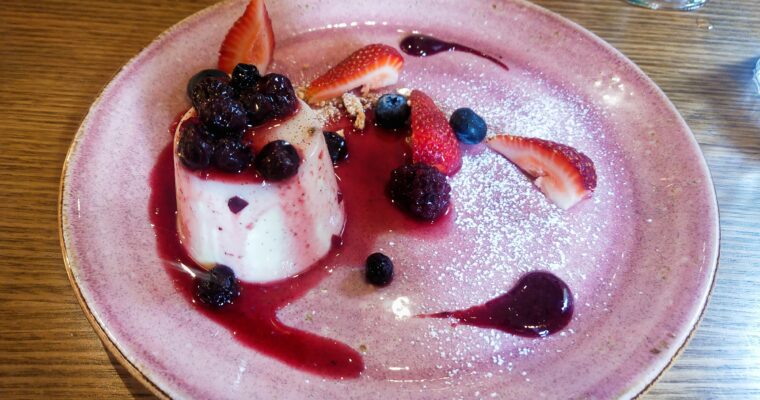
I went out with friends and for once, I wasn’t the therapist at the table. I laughed. I joked. I enjoyed a two-way conversation. I even treated myself to fine dining after almost five months (which is wild because I love fine dining).
I explored neighbourhoods old and new soaking in different cultures, traditions, and experiences. I reminded myself that the world is bigger than my thoughts, bigger than my worries, bigger than the emotional loads I sometimes carry.
And I learned. I always love learning it’s one of the things people often comment about.
Life is just so beautiful when you give yourself the space to actually live it.
After slowing down, resting, and reconnecting with myself, I feel fully recharged. My batteries aren’t just topped up — they’re renewed. And now, as I step back into the office, I’m returning with clarity, purpose, and a vision for the next six months.
It’s amazing what rest can do when you stop treating it like a luxury and start treating it like a necessity. rest as a skill
If you’re a helper, a giver, an empath I know how hard it is to say no. I know how natural it feels to carry other people’s burdens. But you can’t pour from an empty cup. You can’t keep giving when you’re depleted. And you definitely can’t fix someone who isn’t ready to change.
So give yourself permission to step back when you need to. Give yourself permission to rest. Give yourself permission to choose yourself.
Empathy is a gift, but it’s not meant to cost you your wellbeing.
Most people don’t notice the moment their life begins to speed up. It happens quietly—an extra email here, a late-night message there, a calendar that fills itself faster than you can breathe. Before long, the days blur into one long stretch of productivity, and rest …
Disclaimer:This content may include discussions of emotions, mental health, trauma, or other sensitive topics that could be triggering for some individuals. Please take care while engaging with this material and prioritize your wellbeing. If you find yourself feeling overwhelmed, distressed, or in need of support, …
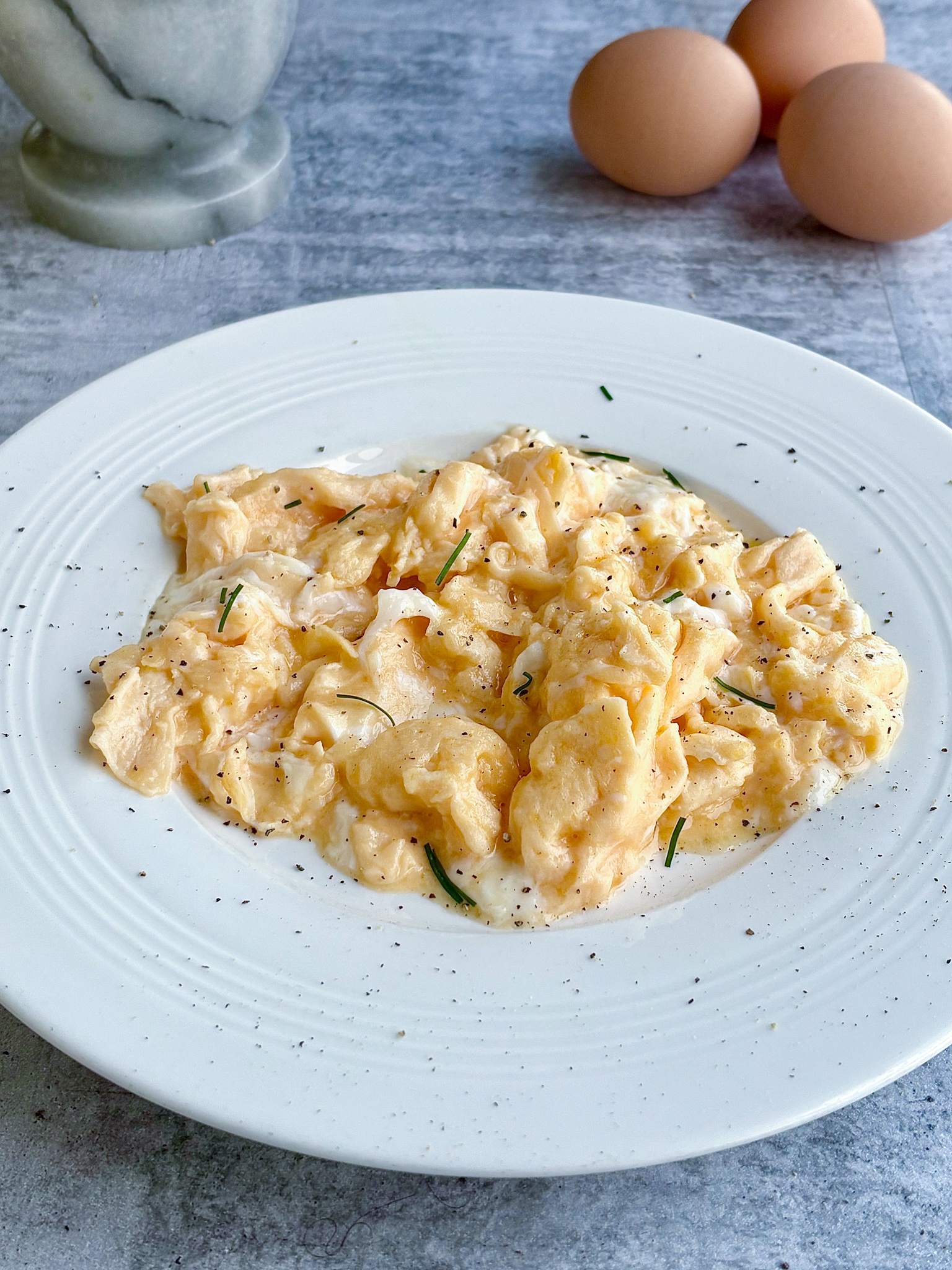
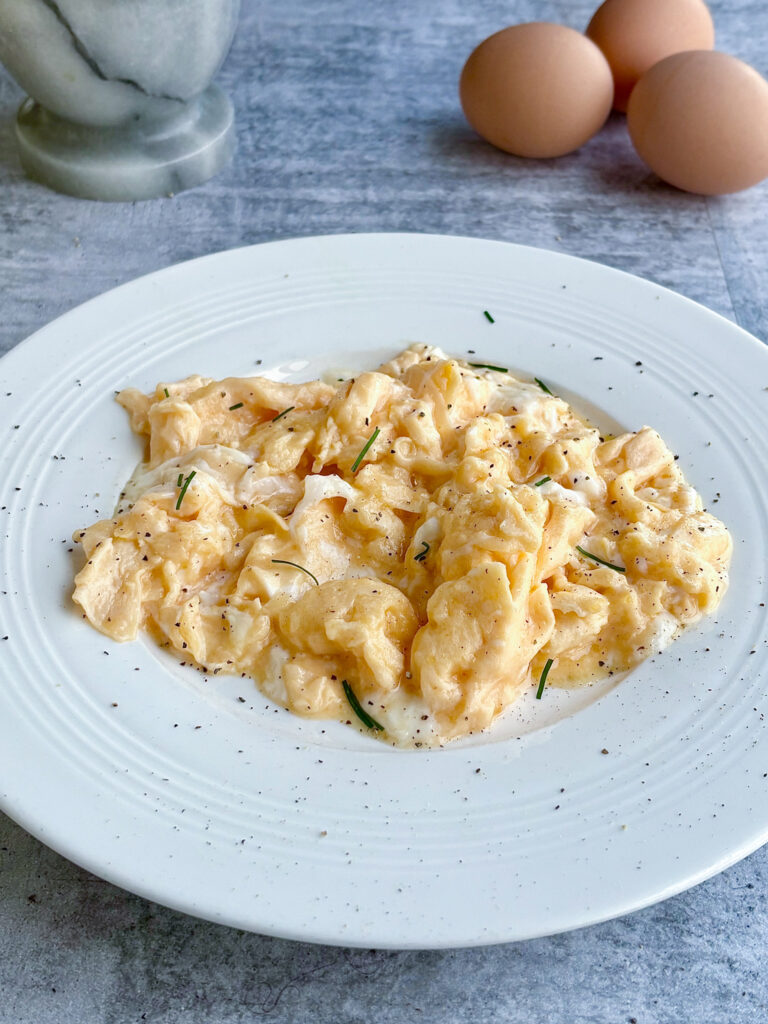
Scrambled eggs is a classic and you will find this in cafes in their breakfast or brunch menu. Last Saturday morning, I kept it simple by preparing scrambled eggs with chives, sautéed mushroom in butter and parsley, and sauteed spinach over rye bread with a little bit of siracha sauce.
We will be focusing on achieving scrambled eggs that have a a creamy texture. Texture, I believe in food adds to the whole eating experience and make a huge different to how a meal is perceived. Think about it, when was the last time you had a meal where is the flavour is great, but there was something about the texture that just seemed not right?
Considerations when preparing scrambled eggs
Eggs consists of mainly water and protein. As water is separated from eggs whilst cooking, this process is known as weeping. If this happens, the eggs may have been cooked too quickly over a temperature that was high. The proteins in the eggs coagulate which tightly squeezing water resulting in eggs becoming watery. To combat this, you want to focus on using low-medium heat on a non-stick frying pan. A non-stick pan is the suggested option when making scrambled eggs or an omelet. You’ll want to keep stirring as the eggs cook fast. Also you’ll want to stop when the eggs begin to firm up. When this occurs, turn off the heat, bringing the eggs together into a mounds and transfer into a plate
Did you make scrambled eggs? Feel free to post your version below, hastag #thatsaftotastic or @thatsafrotastic. Enjoy
Ingredients (Serves 1–2):
3 large eggs
1 tablespoon unsalted butter
Salt, to taste
Black pepper, to taste (optional)
Instructions:
Crack & Beat the Eggs Crack the eggs into a bowl. Beat them well with a fork or whisk until the yolks and whites are fully combined and slightly frothy. (You can add a splash of milk or cream for extra richness, but it’s not necessary.)
Heat the Pan Place a nonstick skillet over low to medium-low heat. Add the butter and let it melt slowly, coating the bottom of the pan.
Cook the Eggs Pour the beaten eggs into the pan. Let them sit undisturbed for a few seconds until they just start to set around the edges.
Gently Stir Using a silicone spatula, gently push the eggs from the edges toward the center. Continue to slowly stir and fold the eggs every few seconds, allowing curds to form.
Remove from Heat Early When the eggs are mostly set but still slightly glossy and soft, remove the pan from heat. The residual heat will finish cooking them.
Season & Serve Season with salt and pepper to taste. Serve immediately while warm and fluffy.
Tips for Extra Fluffiness:
Beat the eggs well to incorporate air.
Cook low and slow for a soft, fluffy texture.
Don’t overcook — remove while still slightly underdone.
Admitting that when we are wrong can feel like standing exposed under a harsh light. It’s a human experience which we often resist more than we relalise. One of the biggest challenges in saying “I’m sorry” is facing the fears and insecurities associated with owning …
In a world that often feels chaotic and fast-paced, finding solace in the simple act of gardening can be a profound and healing experience. Tending to plants not only connects us to nature but also offers a myriad of mental and physical health benefits. Whether …
Thatsafrotastic, what a treasure it has been to me. I remember first time creating this site, and how excited I was sharing recipes, photos and inspiring others to develop a positive relationship with food which, I still aim to do. However, something has come to my attention that I just can no longer seem to ignore. Moving forward, a part of this space I would like is to connect with the people by talking about life experiences, challenging topics such as mental health, vulnerability, accountability which can be very hard topics to talk about (This has already started and have loved the community of supporting one another everyone seeing the need for community). This is something very hard for me because I am a very private person which people might be surprised that I am moving towards this direction. The reason why I am moving towards this direction is to create authentic connection with regards what people may be going through that we may always want to express. As amazing as Social Media can be, the noise, obsessive ‘me culture’, consumerism, hiding behind vulgar and abusive language is not helpful towards our mental health which has led me to follow only the people who I truly find authentic connections rather than over curated photos and we have no idea behind the scenes. Nothing is wrong if you only want to show your best life. For me, sharing the highs and lows with the people I care about is something that matters to me, makes me human and is a part of life which I believe generates sincere connection with others. As much as I love food photography, sometimes, I just want to show the realistic side of how a photo is even though this may not be deemed as instagrammable. I will still take great food photo, however focus and purpose has changed. I would ask myself a deeper question, what is reason why I am posting and sharing this? To get the approval of others, to show how great my life is? Something for all of us to think about.
It is an unfiltered post and it feels raw even as I am typing this. However, I feel like it needed to come from the heart and hope people can also feel this. With AI which is great an interesting especially chatbots, there something about writing from the heart which a machine cannot replicate in my opinion which I sometimes take the risk of being vulnerable and writing this way, because I know someone out the would be thinking the same way.
I believe reflections with the right mindset and purpose can be insightful that could be an inspiration for others. As I am getting older, the way how the world views success is not that version for me. Today is a new day where I am embarking on a new journey that brings me a sense of purpose and joy which I hope can radiate to others. With the chaos and the noise that people are experiencing we need each other and build a sense of community which is a word that has been resounding in my mind.
After speaking and listening to various people from different walks of life, (as obvious as it may sound), it was clear that everyone had different views and values when it comes to food choices. For some, it’s a way of bonding with others, enjoying the …